Friday, September 1, 2017

Creative Writing, a way to enjoy literature

2017 Educational Symposium – New Orleans, USA
AKD INTERNACIONAL –  ADK ETA Cuernavaca, México
Creative Writing, a Way to Enjoy Literature


Mission:Excellence in Education
by Marli Camargo


Purpose

The purpose of this workshop is to undertake some reflection concerning the importance of creative writing. We will explore how teachers can develop and teach a creative narrative, based on their own environment for children and adults.

What is Literature?

According to the Dictionary of literary terminology, literature is:
  • An act of communication between the emissary (author), the message (text), and the receptor (public).
  • Art, reading and writing, and also the basic disciplines of culture: Grammar and rhetoric.
    – Calderón, 2000 (Breve diccionario de términos literarios)

What matters to the reader?

According to Proust, what matters to readers are:
"...words that cause emotions like anguish, a feeling of rejection, darkness, being abandoned."
These kinds of words matter to all humans, from the duchess, the princess, the diplomatic, the writers, the soldiers, the painters etc.
   – (Hiriart, page 10)

Through creative writing the reader can:

  • Travel among the words;
  • Meet the main protagonists;
  • Experience the environment;
  • Visit faraway places or the same space where you are, while traveling back and forward in time;
  • Reflect, live, create and give their own opinion.

Basic elements to help practice writing:
  • Reading constantly;
  • Using the words in an artistic way;
  • Identifying the meaning;
  • Identifying the content.

How to approach creative writing?
Sensorial memory
Use words as:
1- Onomatopoeia  (imitate the sound)  
2- Symbols –  (ex: - citizenship of heaven)
3- Abstracts thoughts- (thinking that is coherent and logical).

How to approach curiosity in writing?
  • The secret of writing;
  • The details ( people, the actions, the thoughts, the desire);
  • Figurative language:
  1. similes (like or as),
  2. metaphors –make one from yourself,
  3. Images –example: children´s books.

How to feed the muse?
  • Experiences from our own lives;
  • Our reactions towards these experiences;
  • The facts, names, dates,  emotions, passions, memories, etc.
For example:
1- The excitement of reading different poems or exploring old libraries;
2- Note keeping;
3- Starting from “..I remember... ”

Where can I get inspiration?
  • the diversity of people’s lives;
  • the weather;
  • the flavors of the food;
  • the culture (traditions, the beliefs);
  • the place you live.
Example: Simple things like onions (see Pablo Neruda, The Onion).

The writing adventure
I would compare the process to a journey of traveling to somewhere for the first time.
For instance, having only a slight idea about the place that you will be to visiting.
According to Bachelard, the writing adventure is “..to experiment the sensations and emotions that the person has felt in relation to the place where she is”.
– (González, 9)

Creative writing
Brings a sense of belonging to the place such as:
A city, the streets, the plazas, the historic centers and the neighborhoods;
It creates a sense of identity;
Making you or the reader a part of the community.

The importance of space in creative writing
In creative writing you can create your own space;
Space gives us the power to be near the people of the community and also to show our identities to other communities;
Gives the opportunity to learn about heritage, natural resources and the regions where you come from or live;
It involves different sectors such as: cultural, touristic and social.

Creative writing and the sustainability
Creative writing has sustainability because the author can cooperate with the community in different ways like the work with:
  • Illustrator and editorials;
  • Government and micro-entrepreneurs;
  • Schools and families;
  • It encourages the writer to involve him/herself to different sectors such as cultural, touristic and social;
  • Schools, families, and hospitals;
  • Government.

How to apply it to children's literature?
Have a look to the author´s book  "Cuernavaca - The Eterna Primavera", by Marli Camargo.

Conclusion
Through creative writing many things can happen:
  • You can become famous and travel around talking about it;
  • cooperate with a sustainable society;
  • teach children and adults  how to do that;
  • Adults  can be encouraged to write and involve themselves to different sectors, such as cultural, touristic and social;
  • It encourages the writer  to involve him/herself to different sectors;
  • It creates a sense of identity;
  • It makes you, or the reader, a part of the community.

Bibliography
Calderón, Demetrio Estébanez, 2000 Breve Diccionario de Términos Literarios – Alianza Editorial
Hiriart, Berta Guijosa Marcela, 2015 Taller Escritura Creativa – Paidós, México
González, Diego Sánchez; Moreno, Luis Angel,  2014 Identidad y Espacio Público – Gedisa Editorial, Barcelona
Camargo, Marli, 2012 Como o turismo pode ser usado para a aprendizagem da cultura mexicana na região de Cuernavaca, Morelos – Universidad de León, España

Tuesday, August 1, 2017


Natural Leadership Just Flows


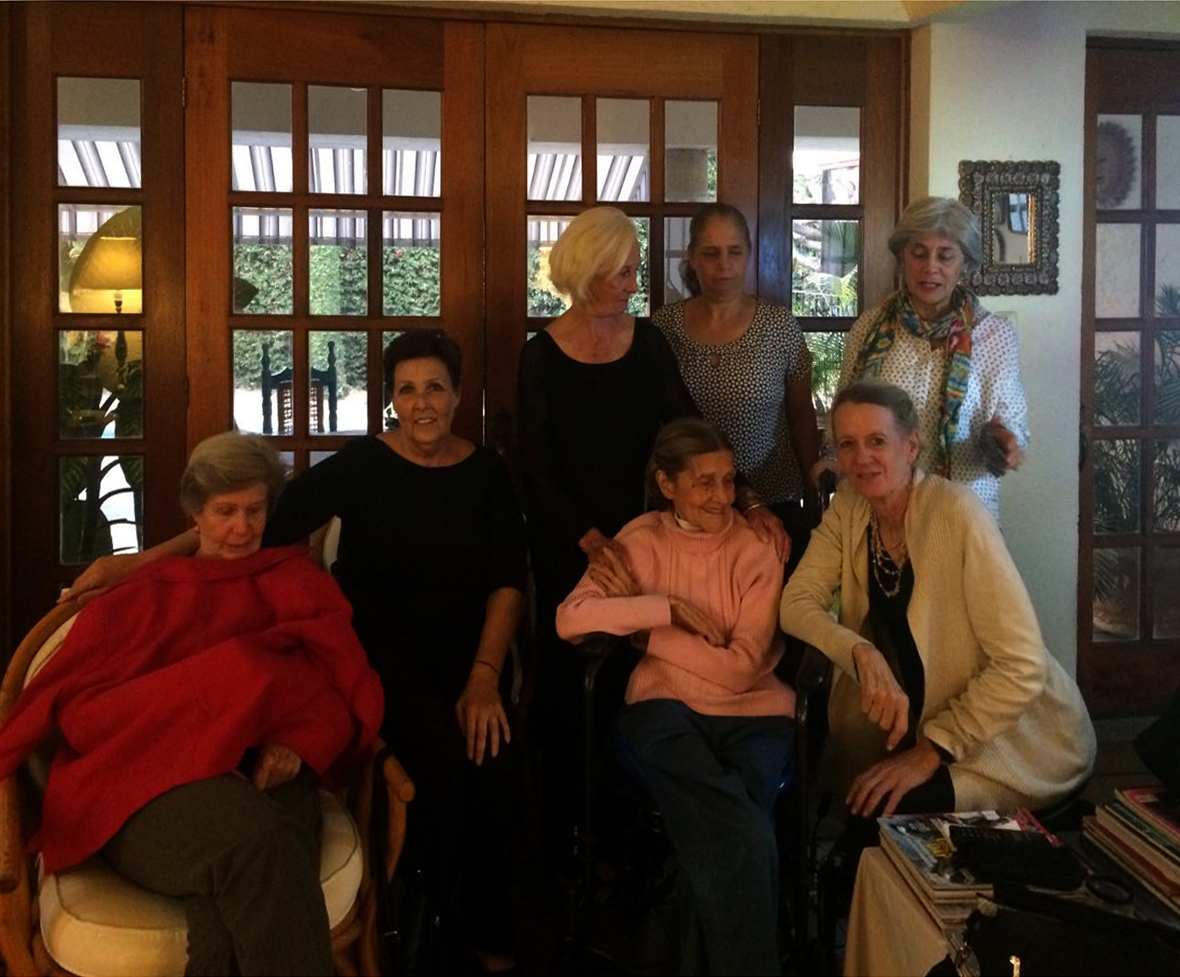
Sisterhood in ADK-ETA Cuernavaca Chapter
By Rebeca Olagaray

    Much has been said and written about leadership: team leadership, autocratic leadership, transactional, transformational, laissez-faire, cross-cultural, leadership skills, leadership qualities, leadership in management… and the list goes on, and on. It seems to be that whenever leadership becomes the topic of a conversation everybody has something to say.


    Every field of human activity has its naturally gifted people, and leadership is not an exception.  Sometimes we end up in a Leadership position because it is required of us during a life situation or... we just have the talent for it and enjoy being a Leader.


    Teachers are leaders, and our teaching style has a direct impact on our pupils. So we should ponder learning more about the Leadership to polish the skill. As democracy has won territory and society has become more and more aware that we all have the same dignity as human beings, we have also become aware that it is a must to consider inclusiveness, horizontal relationships, respectfulness, and empowerment, to improve our teaching and leadership style –just to mention some qualities.


    Also, it happens to be that –unless the chapter has many members– in ADK most of us have the opportunity and responsibility to be the leader for two years. Former leaders are there to nurture, guide, and counsel when needed. On the other hand, there are times when we find ourselves taking on other roles in our community and have the opportunity to support the captain of the ship.
    Natural leaders are those who are confidently being themselves and others simply follow. They don’t need authority to be heard. They are born with a special talent for developing from within the abilities and strategies of leadership.


    Our dear sister Yolanda had that talent. She would always be emphatic, inclusive, egalitarian, and empowering. Whenever she spoke we would certainly listen because she would always listen and be observant of what was going on before she spoke, and then would she effectively communicate to us her wisdom, encouraging our Chapter to follow and fulfill our Mission as ADK’s members.
IMG-20170302-WA0006 arr.jpg


Sweet Yolanda, honest and clear,
always loving, always welcoming, beautiful, and nice.
Informed and cultivated lady,
who nurtured us with wisdom and intelligence.
We deeply and lovingly respect and admire you.
Great leader, you gave us light.
Kindly sharing with us your knowledge,
would continuously set the path to be taken,
by presenting us facts with lucid and keen objectivity.
Now you have reunited with your husband, your beloved companion of life.
But you have left us your manners, your ways,
those that have proved to be so good to us.
God bless you for all the good you have done,
for your disinterested participation on life
to make things good and better.
Thank you for sharing yourself with us.

Friday, July 7, 2017

What Is a Lexile Level

WHAT IS THE LEXILE LEVEL FRAMEWORK AND WHY DO WE NEED IT?

Mission: Excellence in Education

By Elizabeth Robinson


"The LEXILE FRAMEWORK is the scientific way to match readers with text using the same scale.  

Recognized as the standard for matching readers with texts, Lexile measures connect learners of all 

ages with resources at the right level of challenge. Lexile measures provide a clear way to monitor

progress toward college and career readiness."   …www.lexile.com
________________________________________________________________________________

One thing is to know what a Lexile is and another is to know why it is so important in the teaching of reading.

As a teacher of English in Mexico back in 1996, we had no way of measuring the Lexile reading level of a student, nor did we know that books also have their own Lexile level. In order to know the reading level of a student, we had to hear them read orally and apply Reading Comprehension tests based upon the reading they did in the classroom or as homework.

When we had groups of 25 to 30 students, and sometimes two of them, one after the other, it was difficult for us to find the time to listen to each of our students read out loud on their own, sometimes having to keep them from recess or after school to have a quiet 20 minutes or so to hear them. Then, based on our own criteria, opinion or experience as teachers, we would apply a grade to each and every one of our students over X period of time. When a grade was required for a report card, every two months, this was an exercise that had to be done 5 times a year.

I wonder how many teachers sat their students down to read at the very beginning of the year to hear their oral reading skills during the first two weeks of school? Usually during these weeks we were busing getting settled in, learning how to work together and getting to know the personalities of each student in our charge. Where to find the time to hear each one of them read in September or October?

Therefore, how were we to know how much our students could have improved during those two months? Most teachers would simply assign a grade from 5 to 10 and hopefully those with lower grades would improve and those with 10’s would keep their 10’s!

What about growth? What about those students who had entered in September with a poor reading level, and had improved during the first two months of school? What about those students who knew how to read perfectly well at their grade level, but needed motivation to improve even more? At that age, there was always a long road of improvement ahead, but what made them eager to move ahead further than a perfect 10?

How were we to know in reality what the reading level of our students was? Compared to what? Each other? The students we had last year? The other group in the next room?

On the other hand, what about the books we wanted our students to read from the library? What books were we as teachers supposed to be adding to our classroom libraries? Did we choose them by age appropriate topics? By the size of the lettering? By the length of the book? By the vocabulary? By experience?

How were we as teachers really supposed to be sure about the level of books we chose for our students and whether or not the level was appropriate not only for our group, but for the real reading level of each and every one of our students?

Now lets look at why Lexiles are so important:

In the market today, there are tests that students can do on platforms that measure their Lexile Level. The levels run from BR = beginners to 1220L

Typical Reader Measures, by Grade

Grade    Reader Measures, Mid-Year 
              25th percentile to 75th percentile (IQR)

1            Up to 280L

2            230L to 580L

3            360L to 720L

4            480L to 830L

5            620L to 950L

6            690L to 1020L

7            780L to 1090L

8            820L to 1140L

9            880L to 1170L

10           920L to 1200L

11           940L to 1210L

12           950L to 1220L

As previously mentioned, books also receive a Lexile Measure, depending ontext difficulty only. A Lexile measure does not have anything to do with the content or the quality of a book. In other words, Lexile measurement of a book depends on two factors: the difficulty of the book and Word Frequency and Sentence length.

100,000,000 books have had their Lexile level measured in the world and thebenefit of knowing the Lexile level of your student and the Lexile level of the books you want them to read, lies in the matching of these two to increment learning and growth.

Typical Text Measures, by Grade

Grade                Text Demand Study 2009                                2012 CCSS Text
              25th percentile to 75th percentile (IQR)                           Measures*

1                  230L to 420L                                                           190L to 530L

2                  450L to 570L                                                           420L to 650L

3                  600L to 730L                                                           520L to 820L

4                  640L to780L                                                           740L to 940L

5                  730L to 850L                                                           830L to 1010L

6                  860L to 920L                                                           925L to 1070L

7                  880L to 960L                                                           970L to 1120L

8                  900L to 1010L                                                       1010L to 1185L

9                  960L to 1110L                                                       1050L to 1260L

10                  920L to 1120L                                                     1080L to 1335L

11 and 12    1070L to 1220L                                                      1185L to 1385L

How do we match them?

Students will do a test at the beginning of the year when they enter their new grade. Once the teacher has their new Lexile Level, she will match the students up with books slightly lower, on level, and slightly higher than their Lexile level.

The way students gain confidence and enjoy reading because they are understanding the books assigned to them as an individual, not the same story or anthology assigned to the entire group (whether they understand it or not).

Students are motivated to improve their Lexile levels by practicing the skill of reading, in the classroom and at home, once they have read a story, they are invited to answer a reading comprehension test that is also available on the platform. The grade they obtain on that test, will be recorded on the platform so that they and their teacher can follow their progress as the Lexile level as each student improves.

The best Platforms will include not only an extensive library of books with their Lexile Levels identified, but will also provide reports on each and every student, reports by group, by grade and by school. These reports will give the teacher the support they need for those grades teachers used to guess at. The grades or results of their Reading Comprehension tests will provide that information.

How do we obtain a grade for Oral Reading of our students?

The best platforms available on the market should include a recording option so that students can record their voices reading sections of assigned stories and send it to their teacher. What a time saver!

The past 2 decades has brought us many digital components and options for our schools, but to know what these are, and why they are important to education today is the key for exceptional and vanguard decision making.

For further information on Lexile Levels please visit www.Lexile.com


Wednesday, May 31, 2017

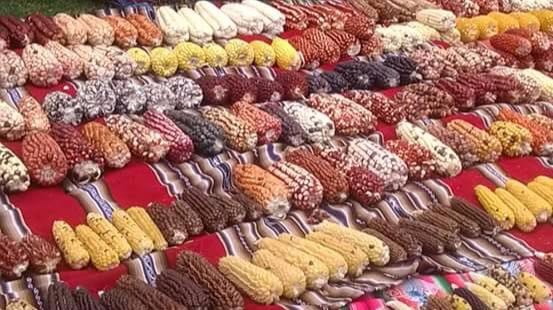
México, the place where corn was born.

México, the Place Where Corn Was Born
How to Prepare Esquites


Mission: World Understanding
By ETA Cuernavaca Chapter


A wonderful way to get in touch with a culture is through one of the most basic human activities: eating


On this occasion we want to share a traditional Mexican snack with you: esquites (or corn kernels).


Corn is a grain that has spread worldwide and was first cultivated and developed by Mexican people about 7,000 years ago. Corn cannot exist in the wilderness, as it requires human care. The seeds, or corn kernels, are protected by the leaves, so they cannot fall apart and spread on their own, but by human hands that thresh them from the husk, sow them, and harvest them.


Many dishes are prepared using corn, including tortillas -the Mexican bread. It is considered the basic staple of Mexican food.

Corn was originally taken to the old world to provide food for people suffering from the famine. Since at the time no one knew the process to prepare the corn for human consumption, its main use has been to feed animals.  


According to the sacred book of Mayan quiches, Popol Vuh, corn and humanity are linked in a strong bond. Here it is written “We are corn people and corn is of the people”.


So let’s share a delicious Mexican, easy-to-prepare corn dish: esquites. The word esquites comes from nahuatl word ízquitl, which means “toasted corn”.


For this, we need:
  • 6 ears of corn
  • Half an onion
  • Half a stick of butter (vegetable oil may be used instead)
  • Two epazote twigs
  • 1 serrano chile (optional)
  • Salt to taste


And for the topping:
  • Lime juice
  • Red chile powder to taste (optional)
  • Mayonnaise (optional)
  • Grated “cotija” cheese (optional)
  • Cream (optional)


Instructions:
  • Cut the corn kernels off with a knife and chop the onion.
  • Heat the butter in a pan.
  • As soon as it melts, sauté the chopped onion
  • Add the corn kernels
  • Add the coarsely chopped epazote leaves and serrano chile
  • Mix with the butter and sauté for about five minutes
  • Add water (about twice the amount of corn kernels)
  • Sprinkle with salt.
  • Cover, reduce heat, and let simmer for 45 minutes


Once kernels are cooked, serve in small bowls or cups, and add any of the toppings -or all of the toppings, as you wish.


Enjoy!