Mission: Excellence in Education
by Jeannie Andersen
Mission: Excellence in Education
by Jeannie Andersen
“If you are afraid of failing you won’t get very far.”
This was Steve Jobs’ conclusion in an interview in his early thirties when asked about the secrets of success.
“You have got to act, you’ve got to be willing to fail, you have to be willing to crash and burn.”
This was Steve Jobs’ conclusion in an interview in his early thirties when asked about the secrets of success.
“You have got to act, you’ve got to be willing to fail, you have to be willing to crash and burn.”
Time and again great thinkers and innovators throughout history have voiced the same thought, that in order to succeed, it’s normal and natural to make some mistakes along the way. Failure has been shown to be essential for success in most areas of life, including education. This was eloquently expressed by Sir Ken Robinson, best-selling author and professor emeritus at the University of Warwick, who addressed the importance of failure on learning, creativity, and success in one of the most-watched TED talks of all time.
According to Robinson, we should be allowed and encouraged to make mistakes which, in turn, nourish our creativity and imagination. Robinson told the TED Talk audience that as children, we are all inherently inquisitive but when we learn in institutional settings, we lose our creativity. In a recent television interview he told the host: “We stigmatize mistakes and we're now running national education systems where mistakes are the worst thing you can make and the result is that we are educating people out of their creative capacities.”
“By the time they get to be adults, most kids have lost their creativity and are afraid of being wrong.”
Robinson argued that making mistakes is a crucial step in the learning process. In the same television interview, he mentioned a friend who won the Nobel Prize. When asked about the secret of success, his friend said 98 % of his experiments failed and that is how he eventually managed to achieve a winning formula and the Nobel Prize. Failure helped him to find the answer.
In spite of the obvious need to fail and fail again in order to succeed, our current educational systems are designed to recognize only one right answer. This mindset starts in the primary school years and continues throughout the educational experience to university levels.

At the primary school level this was exemplified by the narrow focus of “No Child Left Behind” program in the US, approved in 2001 by Congress and promoted by the Bush Administration. It had a retrograde emphasis on teaching children “the basics”, followed by annual testing on these subjects. According to Adam Richardson, by focusing on the basics, “No Child Left Behind” reduced students’ chances of success, rather than increasing them. (1) This congressional act has since been stripped of federal coverage and is now state-regulated, called the “Every Student Succeeds Act”, but the provisions relating to the periodic standardized tests given to students have not been challenged or eliminated. (2)
In higher education, students fare no differently. They experience an educational environment that puts enormous pressure on success which is measured by grades and test scores. Success for these students is getting an A. It’s not about how much they learn; it’s not about how much the topics in the class spark their curiosity about the world around them; it’s not about how classroom experiences transform their world views. Success is about the grade they receive. Standardized testing puts all the emphasis on the final answer rather than the process used to get there. With such a perspective, there is no room for failure so there is no room for experimentation. Students fear trying something new or something that they may not be initially good at because it is far too risky for their GPA. (3)

The argument here is that failure - and learning from it rather than avoiding it – should be viewed as an integral part of learning. Learning from mistakes should be encouraged rather than rejected by modern educational institutes.
What can we do as teachers to foster a shift to an educational experience that permits, and even encourages, being “wrong”?
There is a growing grass-roots movement among contemporary educators that promotes an alternative model. It is characterized by a different mind-set which values making errors. In contrast to “No Child Left Behind” with its focus on “Three R’s” : reading, ‘riting, ‘rithmetic), this new movement celebrates the “Four C’s”: Creativity, Complexity, Curiosity, and Collaboration. (4) This approach to learning is being amply discussed by the connected educator community in blogs, forums, Facebook groups, webinars, Tweets, and other forms of social media so it is easy to tap into on the internet.

Here is a brief summary of a few key concepts and strategies for this kind of learning from the lower levels up to high school:
Formative vs Summative Assessment: Formative assessment is used to monitor student’s learning to provide ongoing feedback that can be used by instructors or teachers to improve their teaching and by students to improve their learning. Summative assessment, on the other hand, is used to evaluate student’s learning at the end of an instructional unit by comparing it against some standard or benchmark. (5) Most teachers who see the value of experimentation and failure in learning prefer “formative assessment” as the more effective means of helping their students throughout the learning experience rather than the pressure of cramming for one final exam. Good formative assessments help both students and teachers gauge understanding and adjust learning and teaching. The best formative questions help students reflect on the learning process, not just the "right" answers. (6)
Flipped classroom: As technology becomes increasingly common in instruction at all levels of education from kindergarten to college, the modern classroom is changing. The traditional teacher-centered classroom is falling away to give students a student-centered classroom where collaborative learning is stressed. Educators are effectively utilizing online learning and changing the way they teach is by flipping their classrooms. High school teachers Aaron Sams and Jonathan Bergman were the first to flip their classrooms.
“The Flip” started when these teachers began supplying absent students with an online lecture they could watch from home or from wherever they had access to a computer and the Internet, including school or the local library. They soon realized that if ALL their students could do this from home, then they wouldn’t need to lecture in class. The technique works this way: instead of trying to apply concepts they learned in class at home by themselves, students watch a 5-7 minute lecture at home, write down any questions they may have, and apply the concepts in class with the guidance of the teacher. Class time is used for expanding upon the content through collaborative learning. (7)
STEAM learning: STEAM is an educational approach to learning that uses Science, Technology, Engineering, the Arts and Mathematics as access points for guiding student inquiry, dialogue, and critical thinking.

The end results are students who take thoughtful risks, engage in experiential learning, persist in problem-solving, embrace collaboration, and work through the creative process. (8) This type of learning involves asking the students to find and solve a problem and providing them with basic, simple materials to solve it, and learning aids such as “Maker Spaces” “Fab Lab”, “Tinker Lab”, etc. The learning is student-centered: students have multiple opportunities to fail and achieve along the way while solving the problem at hand. They develop creativity, critical thinking and engage with each other’s efforts in collaboration to achieve their solutions. The skills they acquire during the learning process are “real-world” and often the project involves solving an issue in their own local community.
See this slide presentation for concrete examples of STEAM objectives and tools to use it in the classroom: Getting Started With Makerspaces and STEAM, Meredith Martin
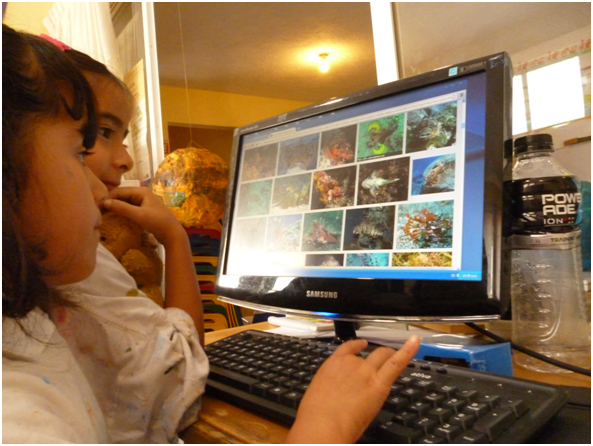
As is evident from the above examples, a fundamental requirement of these new learning approaches is the use of technology. Students are encouraged to use computers, tablets and cell phones which are viewed as tools for learning, and their use is integral in the classroom. As teachers it is hard for many of us to take that leap – to allow electronic devices and other forms of technology in our classes-- but it can be done with proper class management. It is true that students are distracted by technology, especially their mobile phones, but the answer to this problem is not to ban or ignore these devices, but rather to incorporate and embrace them.
Ultimately, there can be no creativity and no success without an openness to mistakes. We should accept the inevitability of errors and view them, when they happen, as learning opportunities. We encourage you to consider accepting mistakes in the learning process and to explore the suggestions and techniques presented here for nurturing experimentation, exploration, and failure amongst your students.
ADK - ETA Chapter
August 2018
Bibliography
1. Where No Child Left Behind Went Wrong, Adam Richardson, Harvard Business Review, October 17, 2011.
Steve Wicks - Formative Assessment Resources, July 2018.
7. http://elearningindustry.com/the-flipped-classroom-guide-for-teachers Christopher Pappas. E-learning industry, September 13, 2013.
Time and again great thinkers and innovators throughout history have voiced the same thought, that in order to succeed, it’s normal and natural to make some mistakes along the way. Failure has been shown to be essential for success in most areas of life, including education. This was eloquently expressed by Sir Ken Robinson, best-selling author and professor emeritus at the University of Warwick, who addressed the importance of failure on learning, creativity, and success in one of the most-watched TED talks of all time.
According to Robinson, we should be allowed and encouraged to make mistakes which, in turn, nourish our creativity and imagination. Robinson told the TED Talk audience that as children, we are all inherently inquisitive but when we learn in institutional settings, we lose our creativity. In a recent television interview he told the host: “We stigmatize mistakes and we're now running national education systems where mistakes are the worst thing you can make and the result is that we are educating people out of their creative capacities.”
“By the time they get to be adults, most kids have lost their creativity and are afraid of being wrong.”
Robinson argued that making mistakes is a crucial step in the learning process. In the same television interview, he mentioned a friend who won the Nobel Prize. When asked about the secret of success, his friend said 98 % of his experiments failed and that is how he eventually managed to achieve a winning formula and the Nobel Prize. Failure helped him to find the answer.
In spite of the obvious need to fail and fail again in order to succeed, our current educational systems are designed to recognize only one right answer. This mindset starts in the primary school years and continues throughout the educational experience to university levels.
At the primary school level this was exemplified by the narrow focus of “No Child Left Behind” program in the US, approved in 2001 by Congress and promoted by the Bush Administration. It had a retrograde emphasis on teaching children “the basics”, followed by annual testing on these subjects. According to Adam Richardson, by focusing on the basics, “No Child Left Behind” reduced students’ chances of success, rather than increasing them. (1) This congressional act has since been stripped of federal coverage and is now state-regulated, called the “Every Student Succeeds Act”, but the provisions relating to the periodic standardized tests given to students have not been challenged or eliminated. (2)
In higher education, students fare no differently. They experience an educational environment that puts enormous pressure on success which is measured by grades and test scores. Success for these students is getting an A. It’s not about how much they learn; it’s not about how much the topics in the class spark their curiosity about the world around them; it’s not about how classroom experiences transform their world views. Success is about the grade they receive. Standardized testing puts all the emphasis on the final answer rather than the process used to get there. With such a perspective, there is no room for failure so there is no room for experimentation. Students fear trying something new or something that they may not be initially good at because it is far too risky for their GPA. (3)

The argument here is that failure - and learning from it rather than avoiding it – should be viewed as an integral part of learning. Learning from mistakes should be encouraged rather than rejected by modern educational institutes.
What can we do as teachers to foster a shift to an educational experience that permits, and even encourages, being “wrong”?
There is a growing grass-roots movement among contemporary educators that promotes an alternative model. It is characterized by a different mind-set which values making errors. In contrast to “No Child Left Behind” with its focus on “Three R’s” : reading, ‘riting, ‘rithmetic), this new movement celebrates the “Four C’s”: Creativity, Complexity, Curiosity, and Collaboration. (4) This approach to learning is being amply discussed by the connected educator community in blogs, forums, Facebook groups, webinars, Tweets, and other forms of social media so it is easy to tap into on the internet.

Here is a brief summary of a few key concepts and strategies for this kind of learning from the lower levels up to high school:
Formative vs Summative Assessment: Formative assessment is used to monitor student’s learning to provide ongoing feedback that can be used by instructors or teachers to improve their teaching and by students to improve their learning. Summative assessment, on the other hand, is used to evaluate student’s learning at the end of an instructional unit by comparing it against some standard or benchmark. (5) Most teachers who see the value of experimentation and failure in learning prefer “formative assessment” as the more effective means of helping their students throughout the learning experience rather than the pressure of cramming for one final exam. Good formative assessments help both students and teachers gauge understanding and adjust learning and teaching. The best formative questions help students reflect on the learning process, not just the "right" answers. (6)
Flipped classroom: As technology becomes increasingly common in instruction at all levels of education from kindergarten to college, the modern classroom is changing. The traditional teacher-centered classroom is falling away to give students a student-centered classroom where collaborative learning is stressed. Educators are effectively utilizing online learning and changing the way they teach is by flipping their classrooms. High school teachers Aaron Sams and Jonathan Bergman were the first to flip their classrooms.
“The Flip” started when these teachers began supplying absent students with an online lecture they could watch from home or from wherever they had access to a computer and the Internet, including school or the local library. They soon realized that if ALL their students could do this from home, then they wouldn’t need to lecture in class. The technique works this way: instead of trying to apply concepts they learned in class at home by themselves, students watch a 5-7 minute lecture at home, write down any questions they may have, and apply the concepts in class with the guidance of the teacher. Class time is used for expanding upon the content through collaborative learning. (7)
STEAM learning: STEAM is an educational approach to learning that uses Science, Technology, Engineering, the Arts and Mathematics as access points for guiding student inquiry, dialogue, and critical thinking.

The end results are students who take thoughtful risks, engage in experiential learning, persist in problem-solving, embrace collaboration, and work through the creative process. (8) This type of learning involves asking the students to find and solve a problem and providing them with basic, simple materials to solve it, and learning aids such as “Maker Spaces” “Fab Lab”, “Tinker Lab”, etc. The learning is student-centered: students have multiple opportunities to fail and achieve along the way while solving the problem at hand. They develop creativity, critical thinking and engage with each other’s efforts in collaboration to achieve their solutions. The skills they acquire during the learning process are “real-world” and often the project involves solving an issue in their own local community.
See this slide presentation for concrete examples of STEAM objectives and tools to use it in the classroom: Getting Started With Makerspaces and STEAM, Meredith Martin
As is evident from the above examples, a fundamental requirement of these new learning approaches is the use of technology. Students are encouraged to use computers, tablets and cell phones which are viewed as tools for learning, and their use is integral in the classroom. As teachers it is hard for many of us to take that leap – to allow electronic devices and other forms of technology in our classes-- but it can be done with proper class management. It is true that students are distracted by technology, especially their mobile phones, but the answer to this problem is not to ban or ignore these devices, but rather to incorporate and embrace them.
Ultimately, there can be no creativity and no success without an openness to mistakes. We should accept the inevitability of errors and view them, when they happen, as learning opportunities. We encourage you to consider accepting mistakes in the learning process and to explore the suggestions and techniques presented here for nurturing experimentation, exploration, and failure amongst your students.
ADK - ETA Chapter
August 2018
Bibliography
1. Where No Child Left Behind Went Wrong, Adam Richardson, Harvard Business Review, October 17, 2011.
2. https://en.wikipedia.org/wiki/No_Child_Left_Behind_Act
3. A Manifesto for Active Learning, Jason Farman, The Chronical of Higher Education, October 3, 2013.
4. Where No Child Left Behind Went Wrong, Adam Richardson, Harvard Business Review, October 17, 2011.
5. https://www.bookwidgets.com/blog/2017/04/the-differences-between-formative-and-summative-assessment-infographic, Lucie Renard — Apr 14, 2017.
6. https://docs.google.com/document/d/1oml_3w-e7LctcIhIW75hNUvs4nmbgaV9SOG2ILjnPg/editSteve Wicks - Formative Assessment Resources, July 2018.
7. http://elearningindustry.com/the-flipped-classroom-guide-for-teachers Christopher Pappas. E-learning industry, September 13, 2013.
8. https://educationcloset.com/steam/what-is-steam/ Susan Riley, the founder of EducationCloset